
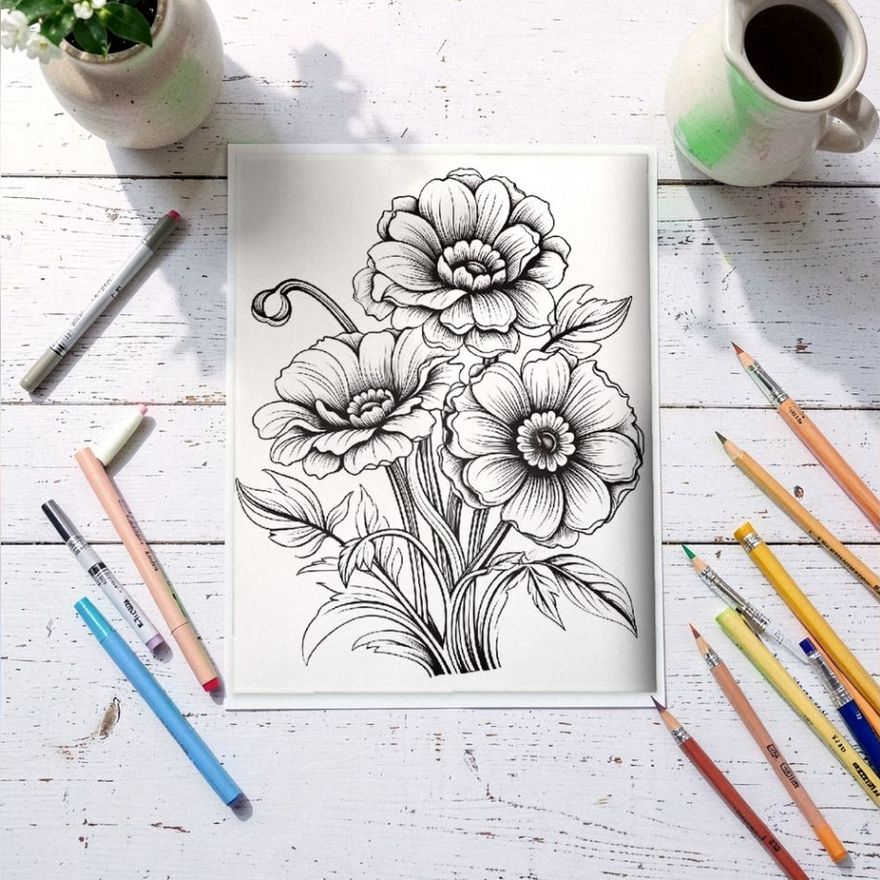
Flowers look real when each petal has a light end and a dark end. Decide where the light comes from, then color every petal darker where it joins the center or tucks under its neighbor and lighter toward the tip, using at least two shades of the same color. Give the leaves two greens, one warm and one cool, leave a few white highlights, and color the background so the flower stands out.
Choose a Light Source First
Before you pick up a pencil, decide where the light comes from and mark it with a small arrow in the margin. Upper left is a common choice, but any direction works as long as you stick with it.
From that one decision, everything else follows:
- Petals and leaves facing the light get the lightest values and the highlights.
- Petals facing away get the darker values.
- Anything underneath something else is in shadow: the base of a petal under the one in front, the stem under a leaf, the leaf under the flower head.
Most flat-looking flowers on coloring pages have the same problem: every petal is colored identically. Changing the light and dark position around the flower, according to one light source, is what makes it look round.
Dark at the Base, Light at the Tip
The base of a petal sits in the shadow of the petals around it, while the tip is open to the light. Many flowers are also deeper in color toward the center, though not all. On a coloring page, the reliable convention is two shades per petal, darker at the base.
- Light shade over the whole petal, light pressure, leaving a small sliver of white at the tip on the lit side.
- Darker shade at the base, starting where the petal meets the center and fading out about a third to half of the way up.
- Blend the transition with the light shade or a colorless blender so you cannot see where one color stops.
- Deepen only the deepest folds and overlaps with a third, darker shade or a touch of the complementary color.
With markers, the order is the same: fill with the light shade, flick the darker one from the base while the first is damp, and go back over the join with the light marker. The full layering method is in how to color with colored pencils, and the marker version in alcohol markers for coloring pages.
Follow the shape of the petal with your strokes. Long petals get strokes from base to tip; round ones get strokes that curve with the edge. Stroke direction quietly suggests the petal's texture.
Leaves in Two Greens
A single green straight from the box makes leaves look like plastic. Use two:
- Yellow-green on the side of the leaf facing the light, and on young leaves near the flower.
- Blue-green on the shaded side, on older leaves lower down, and under the flower head.
Lay the yellow-green over the whole leaf first, then add blue-green from the shaded edge and along the central vein, fading toward the light side. Leave the vein itself lighter, or draw it in with a pale yellow-green after shading. A touch of the flower's own color, a little pink or orange near the stem, ties the leaves to the blossom.
Vary the leaves a little from each other. Some cooler, some warmer, some darker. Nature is never perfectly consistent, and a little variety reads as real.
Leave White Highlights
Plan the highlights before you color, because white paper is the brightest white you have and you cannot get it back once covered.
- A thin white edge along the lit side of each front petal.
- A small spot on the most curved, shiny part of a petal.
- A line along the center vein of a leaf facing the light.
- A dot on any dewdrop or berry.
If you missed a spot, a white gel pen or white paint marker can put a highlight back on top of finished color. That technique is covered in gel pens and finishing touches.
Make White Flowers Pop With the Background
White flowers are the trickiest: if you leave them white and the background white, they disappear. Two things fix it.
Shade the white petals with cool, pale colors. Very light gray, pale blue, lavender or a light warm gray, applied only at the base of each petal and where petals overlap. Most of the petal stays white paper.
Color the background darker than the flower. A medium or dark background, such as deep green, navy, plum or a soft gradient, makes white or pale flowers glow by contrast. Keep it slightly less saturated than the flower so it stays behind.
The same trick works for any pale flower: a background darker than the subject always pushes the subject forward.
Three Worked Examples
Roses
A rose is a cup of overlapping petals spiraling around a tight center. The center is the darkest part because the petals shade each other there.
- Base layer in your lightest rose color over everything, leaving white on the rolled-back edges of the outer petals.
- Middle shade on the inner part of each petal and in the gaps between petals.
- Darkest shade, such as crimson with a touch of violet, deep in the center spiral and in the narrow shadows under each rolled edge.
- Blend, then burnish the center only.
The rolled-back petal edges should be the lightest areas on the whole flower.
Daisies
Botanically, a daisy is not a single flower. Its head is made of many small flowers: the "petals" are ray florets and the yellow center is a dense pack of tiny disk florets. On paper, that means two very different textures.
- White ray petals: shade only the base of each with pale gray or lavender, and the petals that tuck behind their neighbors.
- Yellow center: lemon over the whole disk, then golden yellow or orange on the lower half (away from the light), then a few tiny dots of brown for texture.
- A thin shadow ring of pale gray where the petals meet the center.
- A darker background so the white petals show.
Sunflowers
A sunflower is built the same way as a daisy, only larger. The yellow ray florets surround a big center of disk florets, which grow in interlocking spirals. In a typical head, there are 34 spirals running one way and 55 the other.
- Petals: lemon yellow all over, golden or orange yellow at the base and along the shaded side of each petal, a hint of orange in the deepest folds.
- Center: brown all over, then a darker brown or a brown-violet on the shaded half. Add texture with small dots or short curved strokes that follow the spiral pattern. A thin ring of lighter yellow-brown where the center meets the petals adds depth.
- Leaves: large and rough, two greens as above, darker where they hang under the flower.
Flower Pages to Try
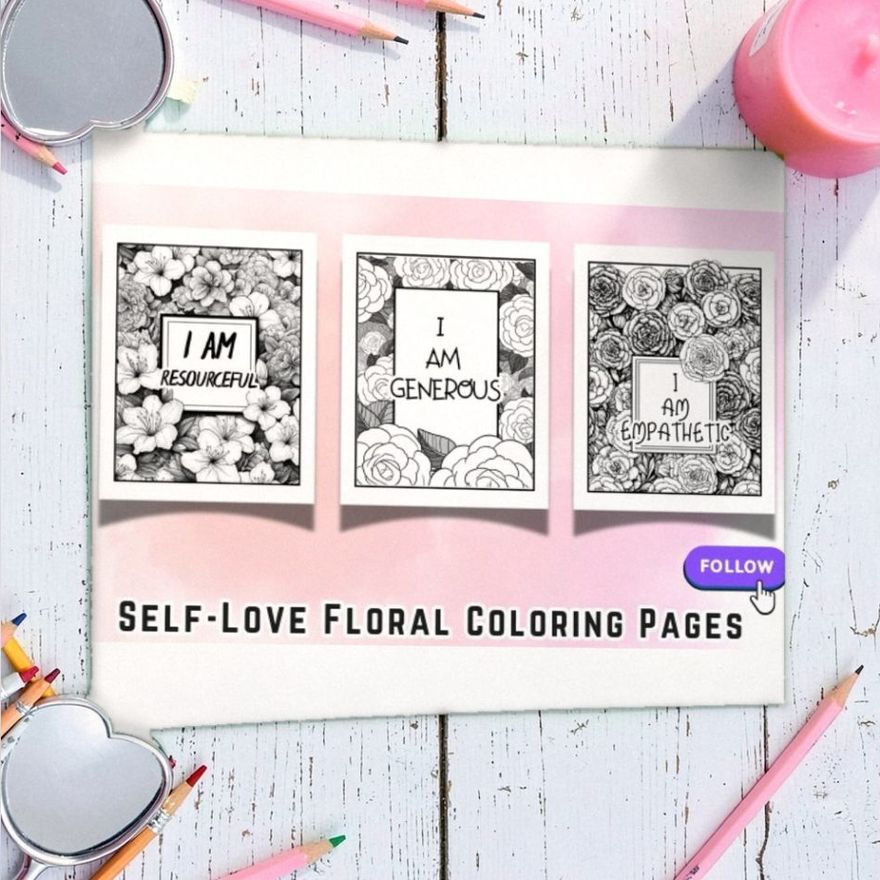
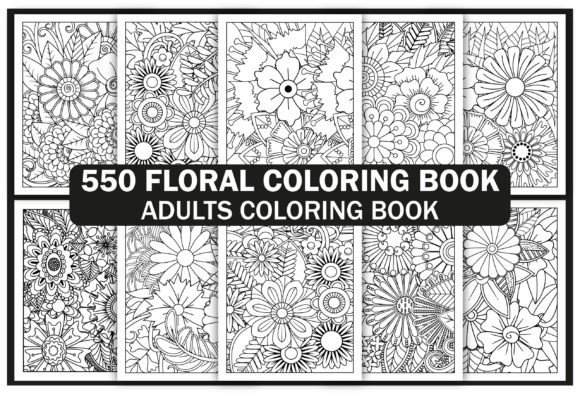
These botanical pages have large petals and separate leaves, which leave room for two-shade shading:

Floral Coloring Book Pages
See the listing ↗
Floral Coloring Pages 2 Graphic
See the listing ↗
200 Heart in Flower Coloring Pages V -2
See the listing ↗From the collection Floral & Botanical Coloring. New Creative Fabrica members get 10 free downloads, and any of these can be one of them.
Bolder flower designs with thicker outlines are quicker and great for practicing the light-source habit:

Bold Flower Coloring Pages for Adults V1
See the listing ↗
Boho Floral Coloring Pages Bold and Easy
See the listing ↗
Elegant Flower Coloring Pages
See the listing ↗From the collection Floral & Botanical Coloring. New Creative Fabrica members get 10 free downloads, and any of these can be one of them.
If you want a palette ready-made, the Garden Brights and Vintage combinations in color palettes for coloring pages both suit florals.
Pencils and Highlight Tools for Petals
Petals need two or three shades of each color, so a larger pencil set earns its place here. A colorless blender smooths the step from dark base to light tip, and a white gel pen puts back a highlight you colored over.
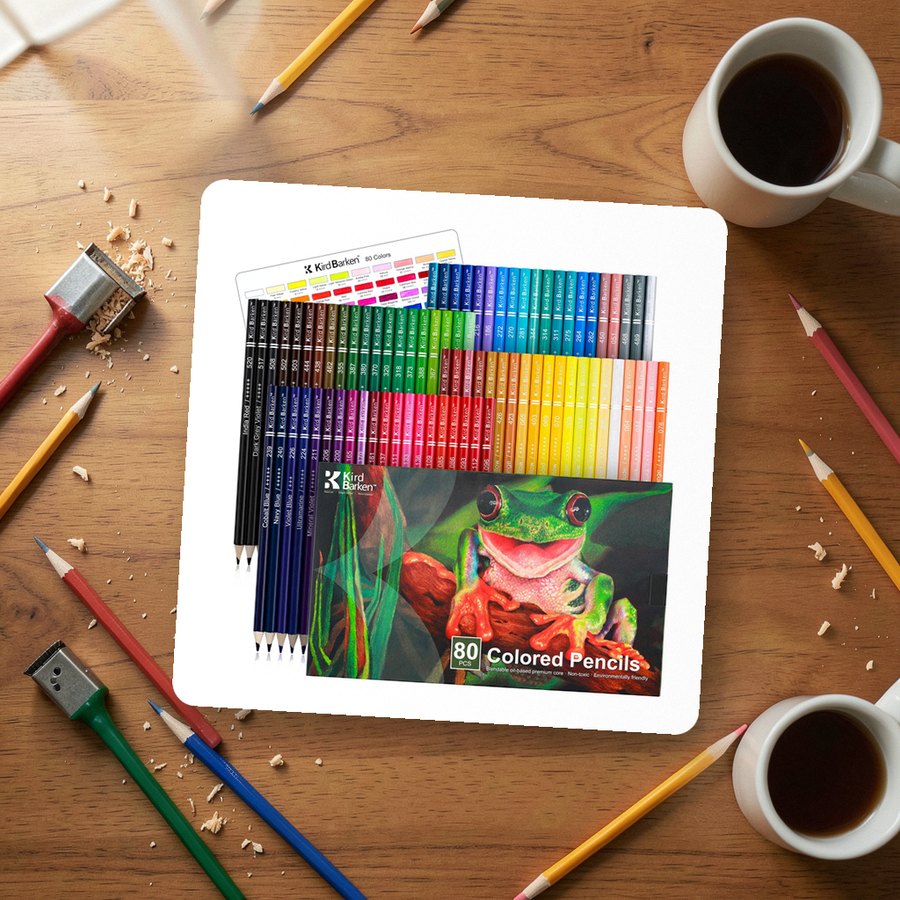 Oil-based colored pencils, 80 colorsKird BarkenSee it on Amazon
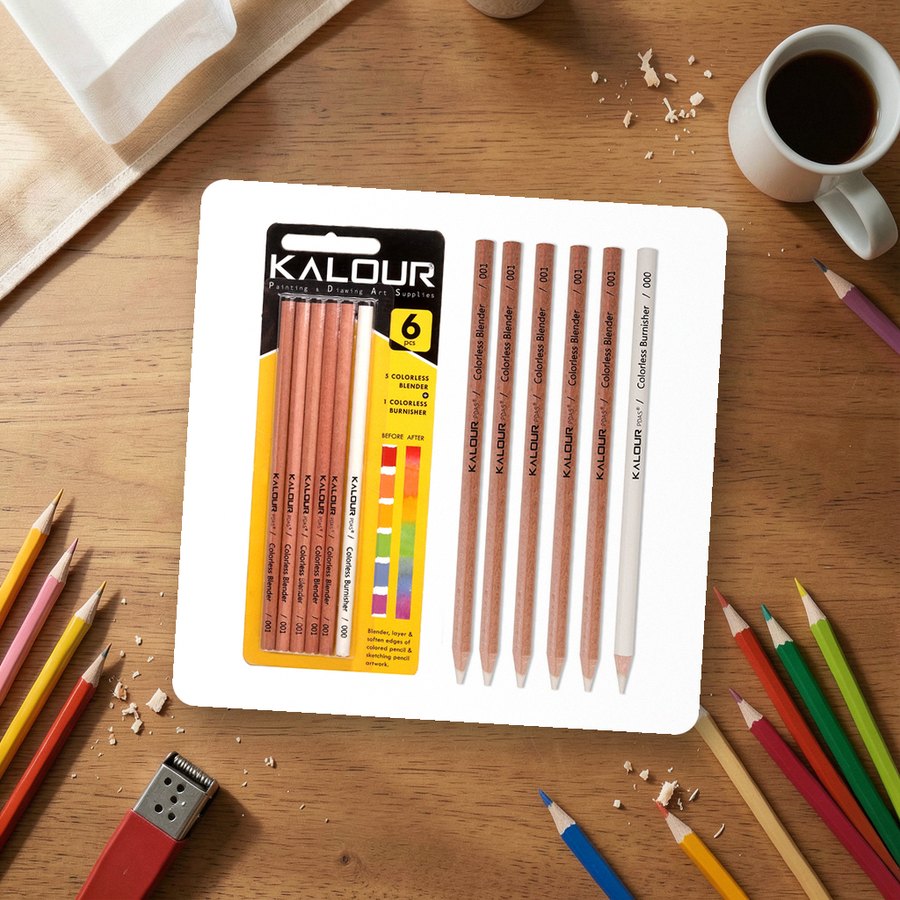 Colorless blender and burnisher pencilsKALOURSee it on Amazon
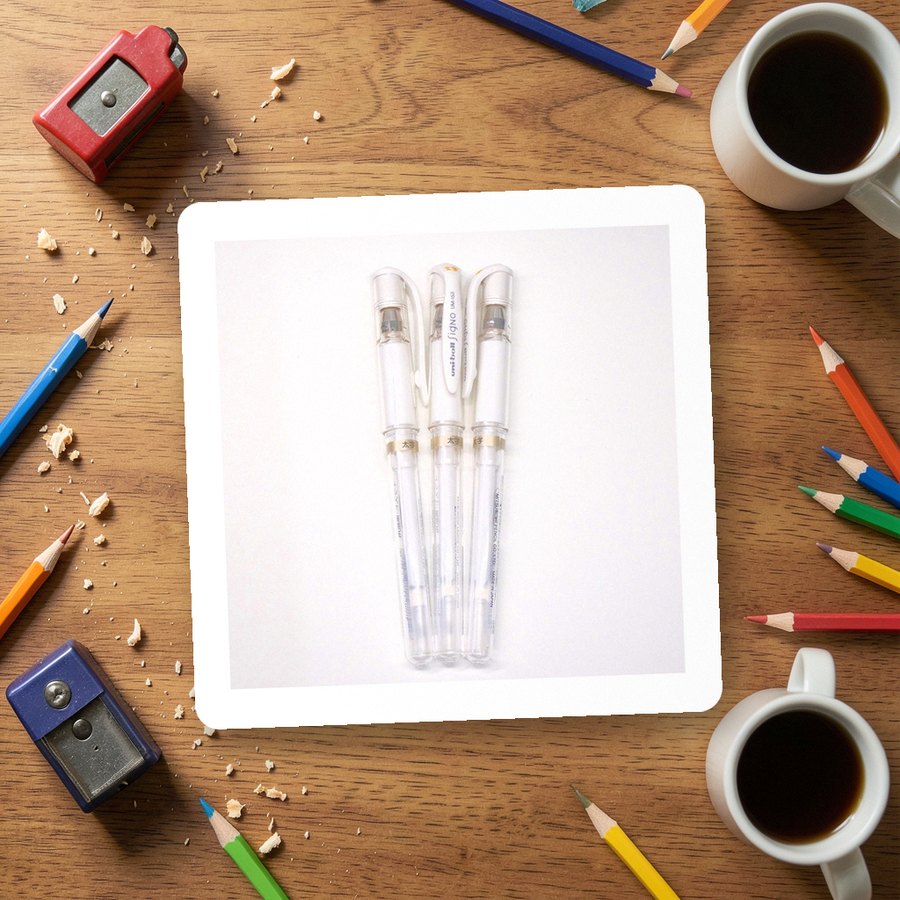 Opaque white gel pens, pack of 3Uni-BallSee it on Amazon
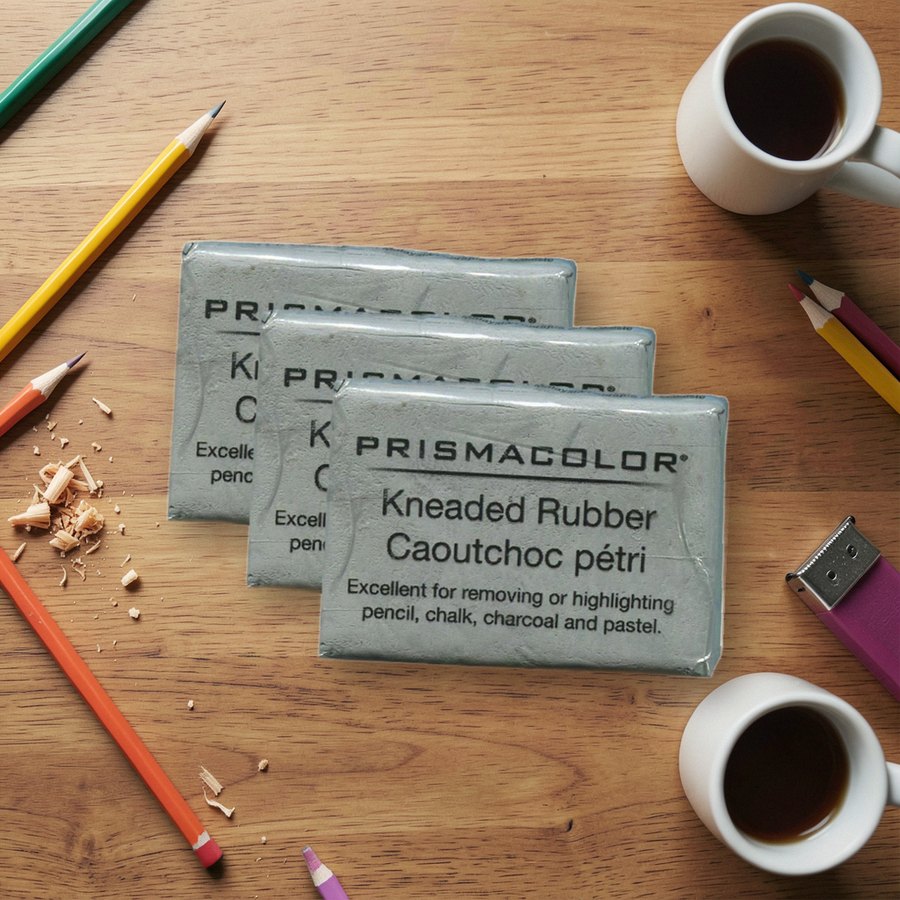 Kneaded rubber erasers, pack of 3PrismacolorSee it on Amazon
As an Amazon Associate we earn from qualifying purchases.
Your Next Flower
Print one page with a single large flower, draw a light-source arrow in the corner, and color only one petal, its neighbor and one leaf following the steps above. When those three look round, finish the rest. The floral and botanical collection has plenty of flower pages to practice on.
Pages to Practice This On
 Floral & Botanical Coloring17 hand-picked · open the collection →
 Adult Coloring Pages11 hand-picked · open the collection →


